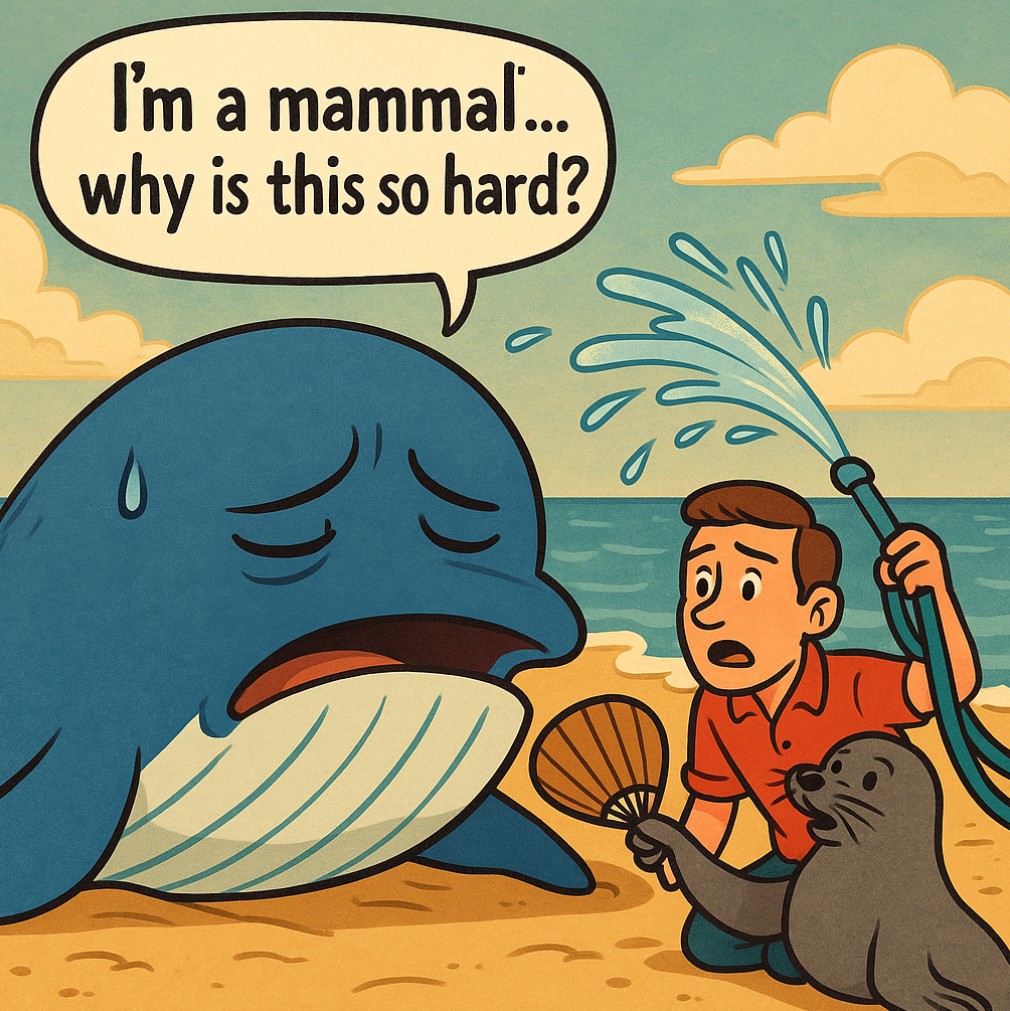
🐋 Definition: Whales Are Aquatic Mammals
Whales breathe air through lungs, nurse their young, and regulate their body temperature
— all traits of mammals.
But unlike land mammals, whales fully adapted to ocean life over millions of years.
So while they can breathe air, they can't live on land due to major physical limitations.
🤔 3 Reasons Whales Can’t Survive on Land
1. Crushing Body Weight
-
In water, buoyancy supports their massive bodies.
-
On land, gravity pulls down their entire weight, crushing internal organs.
-
Beached whales often suffocate under their own weight within hours.
2. Skin Damage
-
Whale skin is designed to stay constantly moist.
-
On land, it dries out, cracks, and suffers from sunburn.
3. Overheating Risk
-
Blubber helps keep them warm underwater.
-
But on land, it traps too much heat, causing overheating and heatstroke.
🧠 Fascinating Facts
-
Whales sleep with one half of their brain at a time, so they don’t forget to breathe.
-
Some can hold their breath for over 90 minutes.
-
Breathing is conscious, not automatic — meaning if a whale faints, it may drown.
🌍 Global Response to Beached Whales
-
In countries like New Zealand and Australia, locals often form rescue groups to keep whales wet and help them return to sea.
-
Some governments have dedicated whale rescue teams and equipment.
Sources
-
Korea Marine Biodiversity Institute
-
BBC Earth "Whales: Giants of the Deep"
-
NOAA (National Oceanic and Atmospheric Administration)