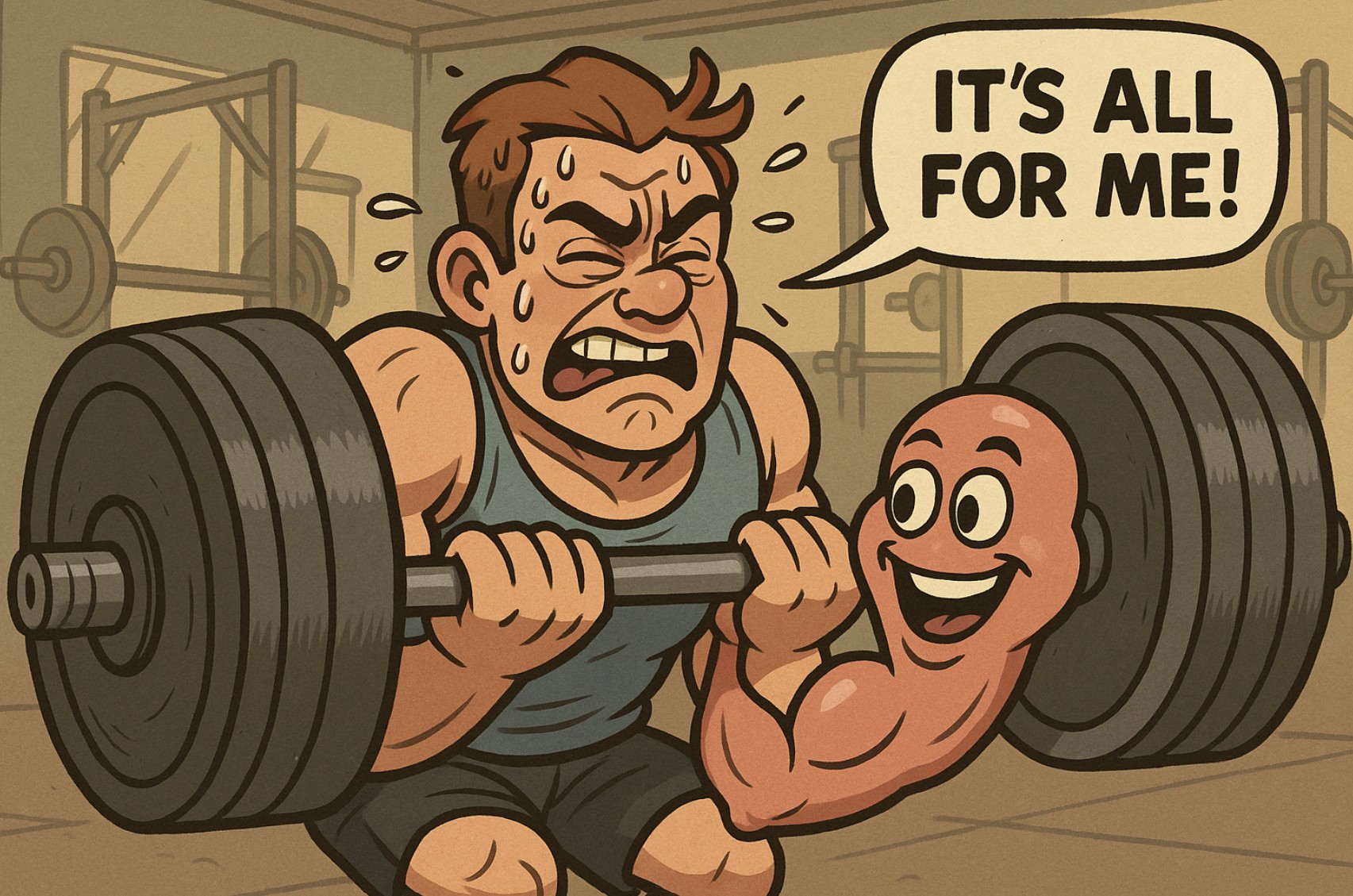
🏋️♂️ Origins & Definition
The idea that “lifting heavy builds muscle” is widely accepted,
but the reason lies in exercise physiology—particularly the Overload Principle and Supercompensation Theory.
When your body experiences muscle stress, it doesn't just repair the damage—it builds back stronger in anticipation of more stress.
💥 Why Hardship Builds Muscle
1. Micro-tears from stress
Lifting heavy weights causes tiny tears in muscle fibers, especially in fast-twitch muscle.
Your body perceives this as damage.
2. Supercompensation kicks in
Instead of just repairing the damage, your body builds it stronger, preparing for the next stressor.
This is called supercompensation—the body over-prepares for next time.
3. Protein = Essential Building Block
Muscle rebuilding requires protein synthesis, supported by hormones like testosterone and growth hormone. That’s why eating protein post-workout matters.
🧠 Fun Facts
-
Muscles don’t grow in the gym—they grow during rest.
-
Too much weight = injury, not gains.
-
After your 30s, you lose muscle mass unless you actively train. This is called sarcopenia.
🌍 Around the World
-
In Japanese Kendo, strength was less important than form and breathing.
-
Western bodybuilding flourished in the mid-1900s, led by icons like Arnold Schwarzenegger.
-
In some African rural areas, carrying weight on the head from a young age naturally builds deep stabilizer muscles.
📚 References
-
McArdle, Katch & Katch. Exercise Physiology
-
ACSM.org
-
PubMed Studies on Muscle Hypertrophy