🧠 What Is It?
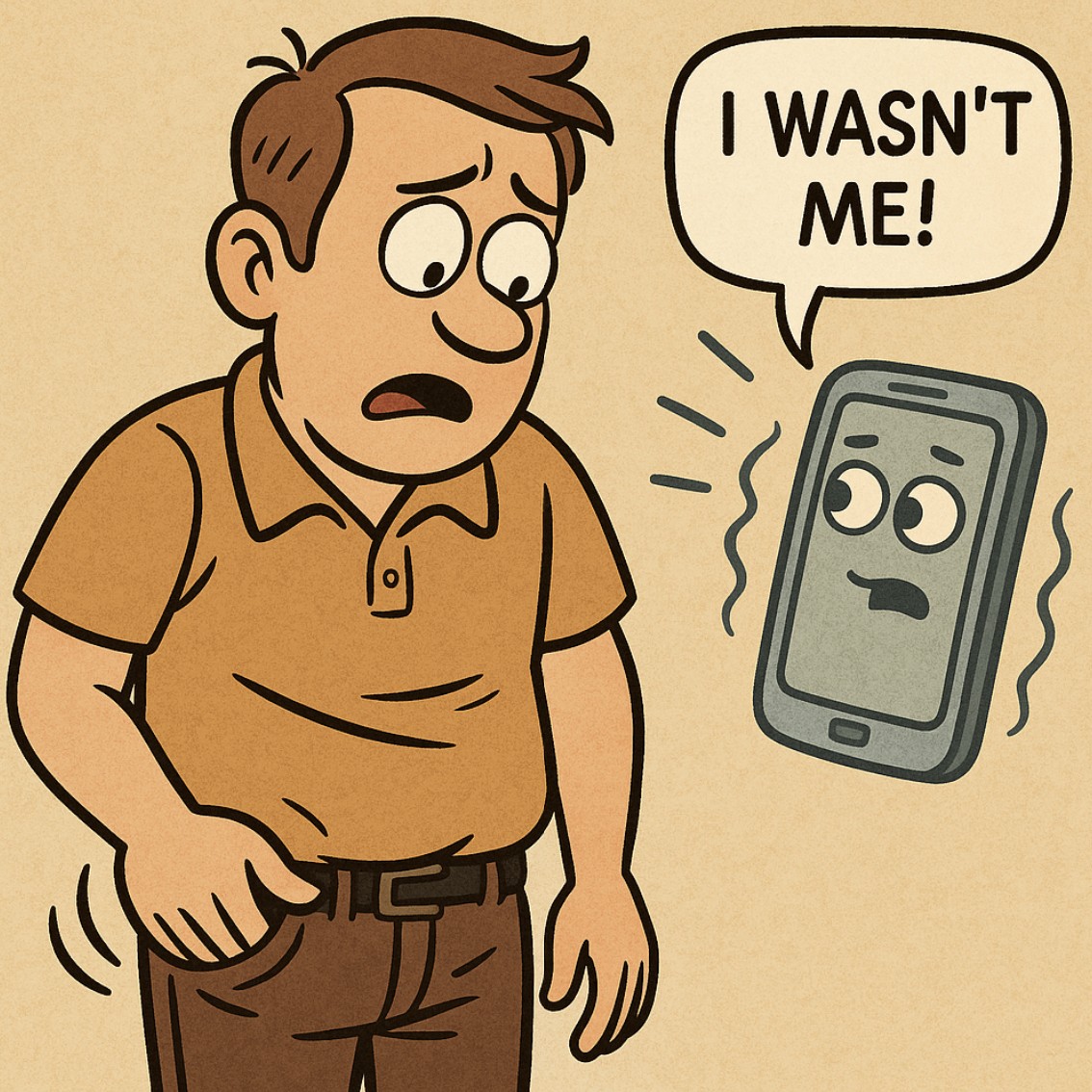
This phenomenon is called Phantom Vibration Syndrome (PVS).
It’s when you feel your phone vibrating in your pocket, even though it’s not there—or wasn’t vibrating at all.
It usually happens where your phone normally stays: thigh, waist, or hip.
📱 Why Does This Happen?
1. Learned signal from habit
Your brain has learned that phone vibration = important signal.
Over time, it gets hyper-aware and overreacts to similar sensations.
2. Sensory misinterpretation
Tiny fabric movements, muscle twitches, or air pressure shifts are mistaken as a vibration.
Stress, fatigue, or anticipation increase the likelihood of this false alarm.
3. Common triggers:
-
A busy notification day
-
Expecting a call or message
-
Wearing tight clothes
-
Sleep-deprived or anxious
🧠 Fun Facts
-
Over 70% of smartphone users report experiencing phantom vibrations.
-
It’s a neurological misfire, involving brain areas like the prefrontal cortex and somatosensory regions.
-
Related to digital fatigue, social anxiety, or notification overexposure.
🌍 Related Phenomena
-
Phantom ringing – thinking your phone is ringing when it isn’t
-
Phantom limb – feeling sensations in an amputated limb
-
Ghost touch – screen seems to respond to invisible touches
📚 References
-
Rothberg et al. (2010), Phantom vibration among medical staff
-
Harvard Health Publishing
-
Journal of Clinical Nursing (2019)
🎨 Card Image Request
In American cartoon style:
A man checking his empty pocket with a puzzled face, while a ghostly image of a phone beside him says, “Wasn’t me!”
🏷️ Tags
phantom vibration, digital illusion, phone addiction, cognitive misfire, smartphone psychology