Vitamin D and Sunlight – Origin and Definition
Vitamin D: The “Sunshine Vitamin”
Vitamin D is a fat-soluble vitamin essential for bone health and immune function.
While you can get it from food, the body can also synthesize it naturally through sunlight exposure
— specifically via UV-B rays.
This discovery traces back to early 20th-century German doctors
who noticed that children
with rickets improved after sun exposure.
Why Bare Skin Matters
Clothes and Glass Block UV-B
When UV-B rays hit the skin, a compound called 7-dehydrocholesterol converts
into pre-vitamin D3, which then becomes usable vitamin D3 in the body.
But:
-
Clothing, sunscreen, and glass block UV-B rays.
-
Only direct exposure to bare skin allows this reaction.
Best Exposure Areas
Larger skin surfaces = more vitamin D. So exposing arms, legs, or torso is far better than just your face.
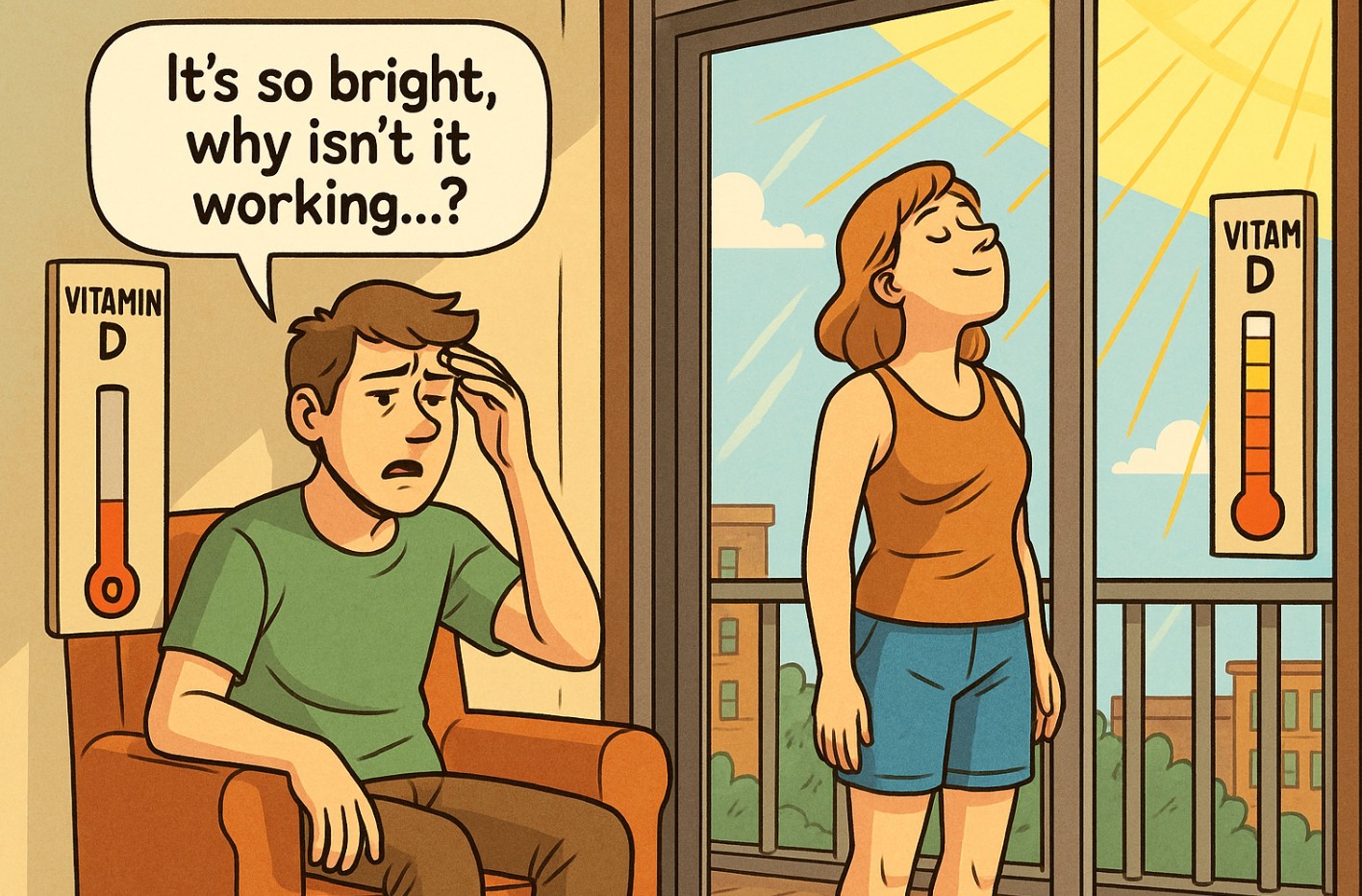
Why It Doesn’t Work Behind a Window
Glass Blocks UV-B
Most window glass blocks UV-B almost entirely, though it lets UV-A through.
So sitting behind a sunny window = no vitamin D production.
☀️ Sitting in the sun behind glass is ineffective for making vitamin D!
How Long Should You Stay in the Sun?
| Skin Exposure Area | Daily Duration (Spring–Autumn) |
|---|---|
| Face and arms | ~15–30 minutes |
| Arms + legs | ~10–15 minutes |
| Winter | 30+ minutes or supplements |
Adjust based on skin sensitivity and latitude.
Skin Color Affects Synthesis
-
Darker skin = more melanin = less UV-B absorption = needs more sun.
-
Lighter skin = faster vitamin D production.
Sunscreen Paradox
SPF 30 sunscreen can reduce vitamin D synthesis by over 95%,
according to some studies. But unprotected exposure also raises skin cancer risk, so balance is key.
Conclusion
To make vitamin D from sunlight, your bare skin must be exposed directly
— not behind glass. Even short, regular exposure can support stronger immunity and healthier bones.
Tags
vitamin D, sunlight, UVB, glass effect, skin health, bare skin, immunity, health tips