🌱 Origins and Definitions
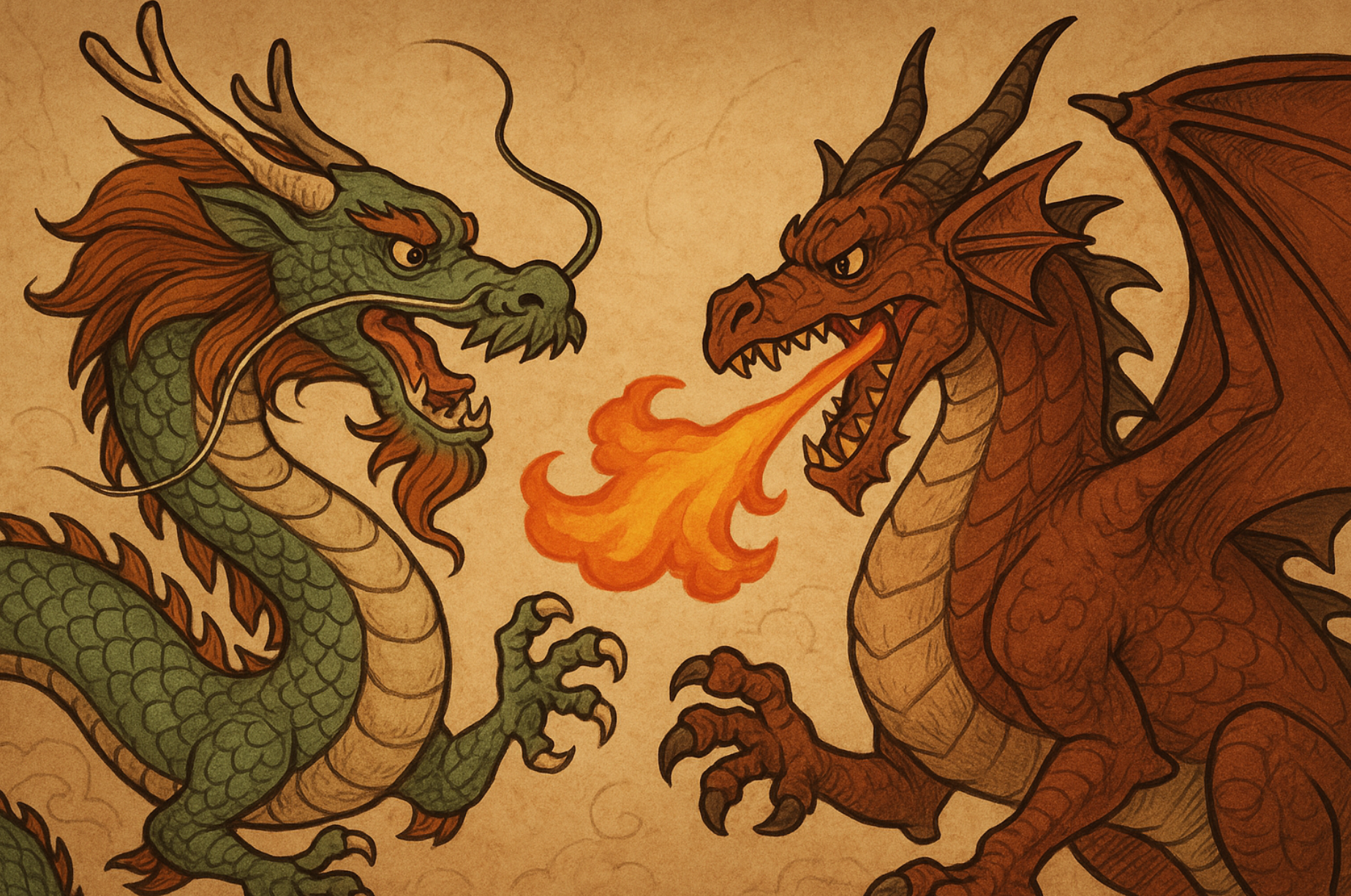
🐲 Eastern Dragon (Yong, 용)
-
Found in Chinese, Korean, Japanese mythologies
-
Long, snake-like body with deer antlers, whiskers, and eagle claws
-
Symbol of water, rain, harmony, power, and royalty
-
No wings, yet it flies
-
Seen as a benevolent, divine creature
🐉 Western Dragon
-
Originated in European mythologies (Greek, Norse, Celtic)
-
Reptilian body with leathery wings, fire-breathing, horns, and claws
-
Often evil, destructive, guarding treasure or kidnapping maidens
-
Seen as a monster to be slain by heroes or saints
🔥 Why Are They So Different?
1. Geography and Environment
-
East Asia: rivers, lakes, rain → dragons as water spirits
-
Europe: mountains, caves, volcanoes → dragons as fiery beasts
2. Religious & Philosophical Influence
-
East: Taoism, Confucianism, Buddhism → dragons as harmony bringers
-
West: Christianity → dragon as Satanic symbol (Revelation: “red dragon” = devil)
3. Role in Society
-
Eastern dragon: Emperor’s symbol, seen on royal robes
-
Western dragon: Enemy of civilization, to be defeated by knights
🤓 Fun Facts
-
Fire-breathing dragons only became popular during the Middle Ages
-
Eastern dragons are rain-bringers, involved in weather rituals
-
Modern fiction (e.g. Pokémon, anime, RPGs) often blends both styles
🌍 Dragons in Other Cultures
| Region | Name | Form | Traits |
|---|---|---|---|
| India | Nāga | Serpent | Guardian deity, water god |
| Norse | Jörmungandr | Sea serpent | Encircles the world |
| Slavic | Zmey | 3-headed fire-breather | Fought by heroes |
| Maya | Kukulkan | Feathered serpent | God of wisdom & wind |
🎯 Conclusion
Although both "Yong" and "Dragon" translate the same,
they reflect opposite cultural imaginations.
🐲 Eastern: Symbol of order, wisdom, power
🐉 Western: Symbol of chaos, destruction, fear
They are not the same dragon—they are cultural mirrors of different worlds.
🏷️Tags: dragon, asian dragon, western dragon, mythology, cultural difference