📜 Meaning and Origin
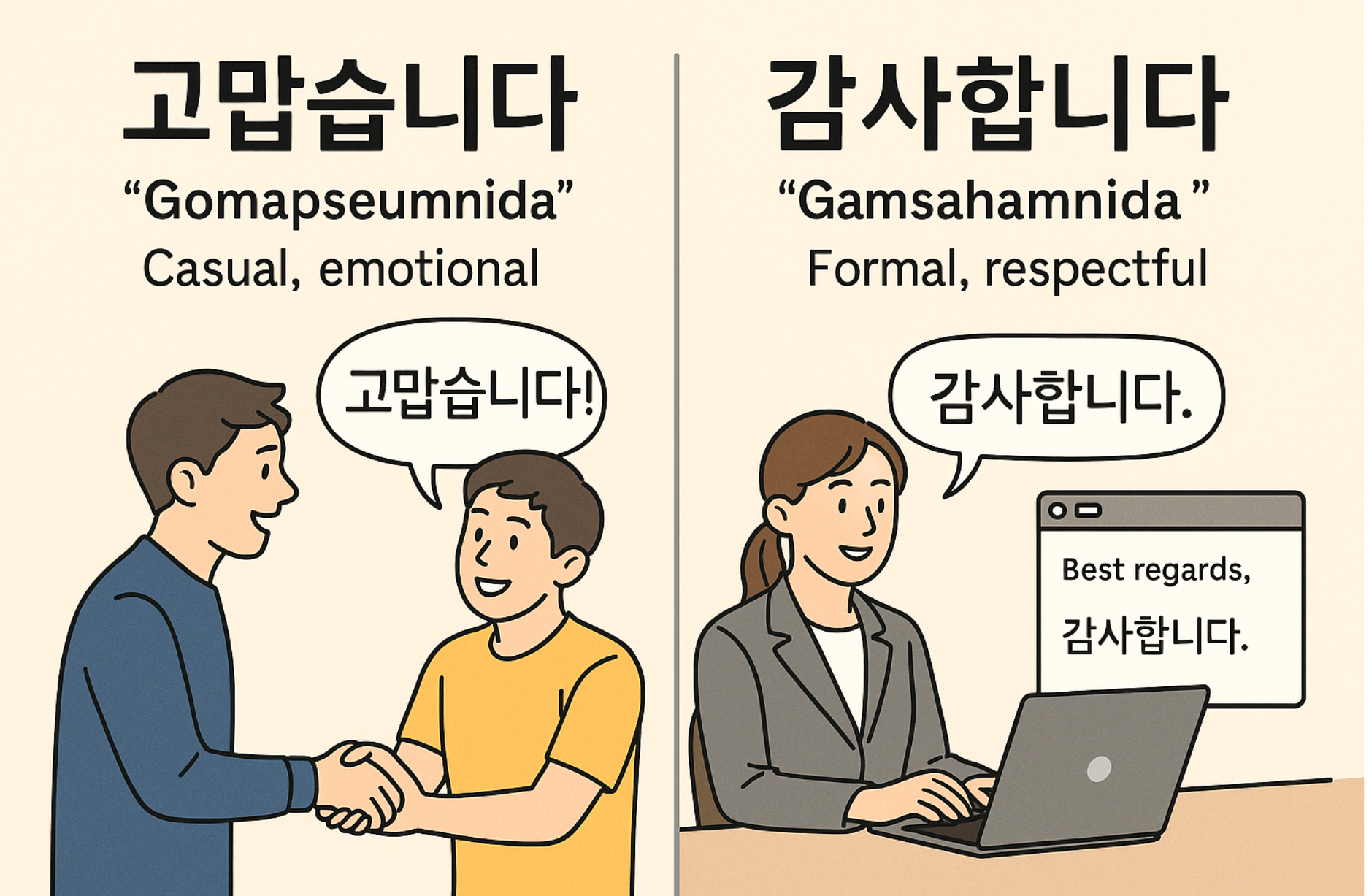
🧾 "Gomapseumnida" (고맙습니다)
-
Originates from native Korean word "gomapda (고맙다)"
-
Emphasizes personal, emotional gratitude
-
Used in casual or heartfelt situations
Example:
"Thank you for the umbrella!" → “고맙습니다!”
🧾 "Gamsahamnida" (감사합니다)
-
Comes from Sino-Korean: 感謝 (感: feel, 謝: thanks)
-
Feels more formal, polite, and respectful
-
Common in business, speeches, official settings
Example:
"Thank you for listening." → “감사합니다.”
🧭 Summary of Use
| Feature | Gomapseumnida | Gamsahamnida |
|---|---|---|
| Origin | Native Korean | Sino-Korean |
| Tone | Warm, emotional | Formal, respectful |
| Usage | Casual, daily life | Official, business |
| Example | "Thanks, buddy!" | "Thank you very much." |
🧠 Fun Fact
-
"Gomapseumnida" often feels warmer and closer to the heart
-
"Gamsahamnida" is more professional, used in speeches or emails
-
Korean kids are often taught “gomapda” first
-
Historically, thanks were expressed for 恩 (eun: grace or favor)
🌏 English Equivalents
-
고맙습니다 → "Thanks", "Thank you"
-
감사합니다 → "I really appreciate it", "I am grateful"
✅ Conclusion
✔ Both are polite and correct ways to say thank you!
✔ Choose depending on the context and relationship:
-
Business or public context → Gamsahamnida
-
Friendly or casual tone → Gomapseumnida
It’s all about tone and connection!