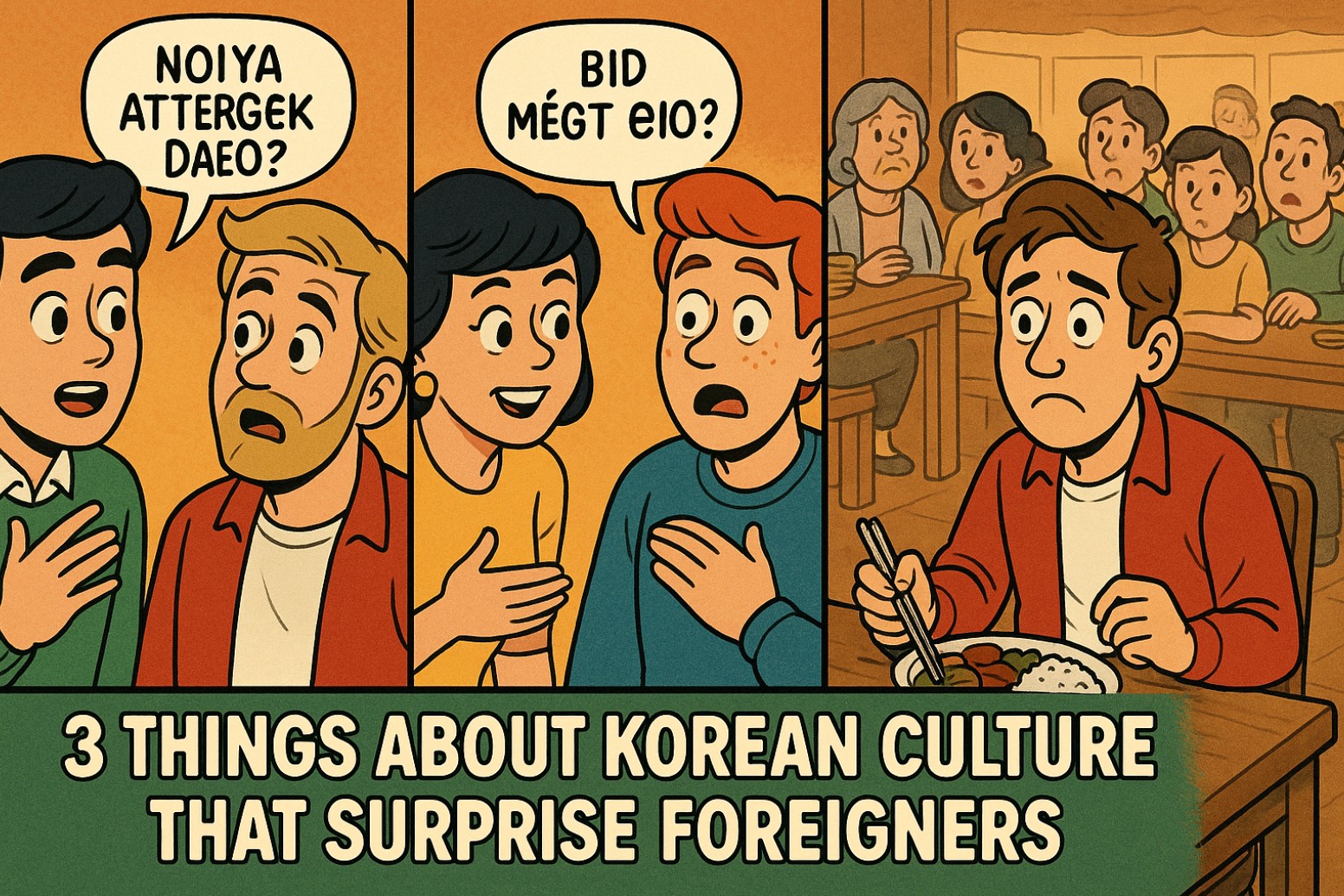
What is Korean culture?
Korean culture uniquely blends modern innovation with Confucian traditions.
To foreigners, this means people may be using the latest phones—while still bowing and worrying about age order.
Let’s look at the top three surprising things foreigners notice.
1. Asking Your Age First
Age before name?
In Korea, it’s common to ask how old someone is right after meeting them.
This helps determine the correct language level and relationship status, such as using honorifics or casual speech.
Interesting Fact
-
In Western culture, asking someone’s age can be seen as rude.
-
Koreans use titles like “hyung,” “noona,” “oppa,” “unni,” based on age.
-
Being the “same age” means being equals—very important for friendships.
2. “Did You Eat?” as a Greeting
It’s not about food, it’s about care
In Korean, “밥 먹었어?” (Did you eat?) is often used like “How are you?”
It comes from a time when ensuring someone ate was a sign of care and love.
Interesting Fact
-
English speakers don’t use food as a greeting.
-
It reflects Korea’s history of scarcity and strong community values.
-
Even today, “Let’s eat sometime” often means “Let’s catch up!”
3. Eating Alone Still Feels Awkward
Solo diners feel watched?
Although it's changing, eating alone (혼밥) in Korea can still feel awkward in many places.
Some restaurants even require minimum orders for two, making it difficult for solo visitors.
Interesting Fact
-
In the West, eating alone is completely normal.
-
Korea has started opening solo-dining cafés and ramen booths.
-
Still, the idea that “food is best shared” remains strong.
Cultural Comparison
-
US/Europe: Individualistic greetings and solo lifestyle
-
Japan: Formal, but less obsessed with age
-
SEA countries: Group-centered but more casual about solo dining
Sources
-
YouTube Interviews with Foreigners in Korea
-
Korean Tourism Organization (KTO) Cultural Brochure
-
Foreigner Blog Reviews on Korean Life
Tags
korean culture, culture shock, age hierarchy, food greeting, solo dining