🧾 Origin & Meaning
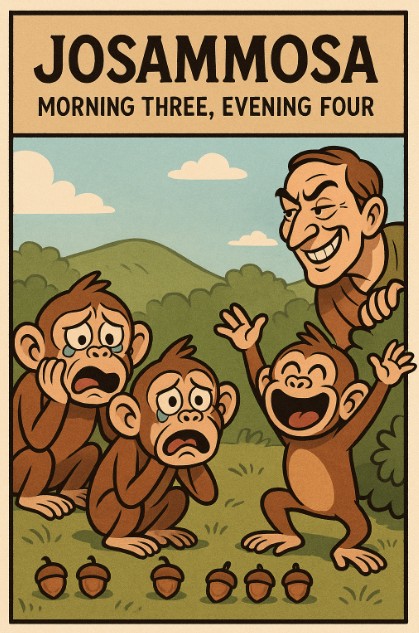
Josammosa (朝三暮四) literally means
“Three in the morning, four in the evening.”
From an old Chinese story:
A man feeds his monkeys 3 acorns in the morning and 4 in the evening.
They complain.
So he says:
“Okay, 4 in the morning and 3 in the evening.”
The monkeys are pleased – even though it's still 7 total.
This idiom reflects how people are easily fooled by appearances, not substance.
💡 Fun Fact
-
This story from Zhuangzi (Chuang-tzu) is a classic metaphor for manipulation and shallow thinking.
-
Modern-day examples?
✔️ Repackaged discounts
✔️ Marketing spin
✔️ Salary restructuring without actual raise -
It’s also an early example of what psychology today calls the framing effect.
🌍 Related Idioms & Sayings
📌 English
-
“Six of one, half a dozen of the other.”
-
“Same difference.”
📌 Chinese & Japanese
-
Also called “朝三暮四” in Chinese and Japanese — with identical meaning.
🧠 Tiny but Mighty Tip
-
Don’t just listen to the numbers – question the structure behind them.
-
Smart people see through presentation tricks to evaluate the actual content.
📚 Sources
-
Zhuangzi: Chapter on Equalizing Things
-
The Framing Effect in Behavioral Economics
-
Classic Chinese Idioms
Tags:
Korean: 조삼모사, 사자성어, 속임수, 원숭이, 장자, 프레이밍효과
English: josammosa, deception, idiom, Korean_saying, framing_effect, psychology