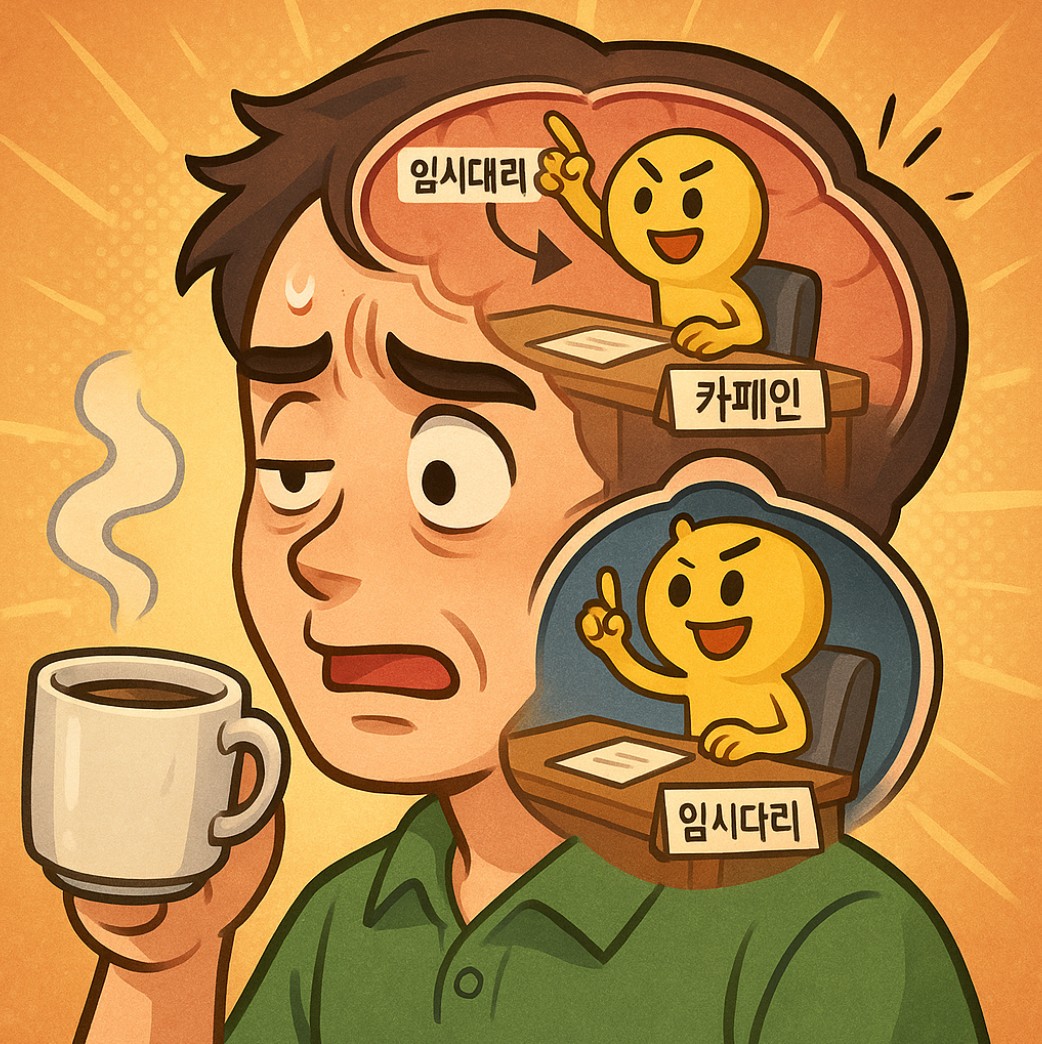
The Core Reason: How Caffeine Works
What Is Caffeine?
Caffeine is a natural stimulant found in coffee, tea, chocolate, cola, and energy drinks.
Its most well-known effect is boosting alertness and fighting drowsiness.
The Science: Blocking Adenosine
What Is Adenosine?
Adenosine is a neurotransmitter that makes you feel sleepy.
The more active your brain is, the more adenosine builds up — signaling that it’s time to rest.
How Caffeine Works
Caffeine mimics the shape of adenosine, allowing it to bind to adenosine receptors without activating them.
➡ This blocks the sleep signal, keeping you alert.
Caffeine doesn’t remove sleepiness — it just hides it temporarily.
Interesting Facts
You're Not Less Tired — Just Distracted
Once caffeine wears off, the built-up adenosine hits all at once, making you even more tired.
What If Coffee Doesn’t Work?
-
You may have developed caffeine tolerance
-
You may be too sleep-deprived
-
You may have had decaf by accident
How Long Does It Last?
| Factor | Detail |
|---|---|
| Onset | 15–30 minutes after consumption |
| Peak | Around 1 hour |
| Duration | 4–6 hours (varies by person) |
| Recommended Limit | ≤400mg per day (about 3–4 cups for adults) |
Cultural Variations
Japan: Green Tea Focus
Japanese drink more green tea, which combines caffeine with L-theanine, a calming compound that enhances focus.
Europe: Espresso Culture
In France or Italy, a strong shot of espresso after meals is both a digestive aid and an energy boost.
Conclusion
Coffee keeps you awake because caffeine blocks the sleep-inducing chemical adenosine from working.
But remember: it’s just temporary alertness, not true rest.
Tags
coffee, caffeine, adenosine, alertness, drowsiness, sleep science, fatigue, neuroscience