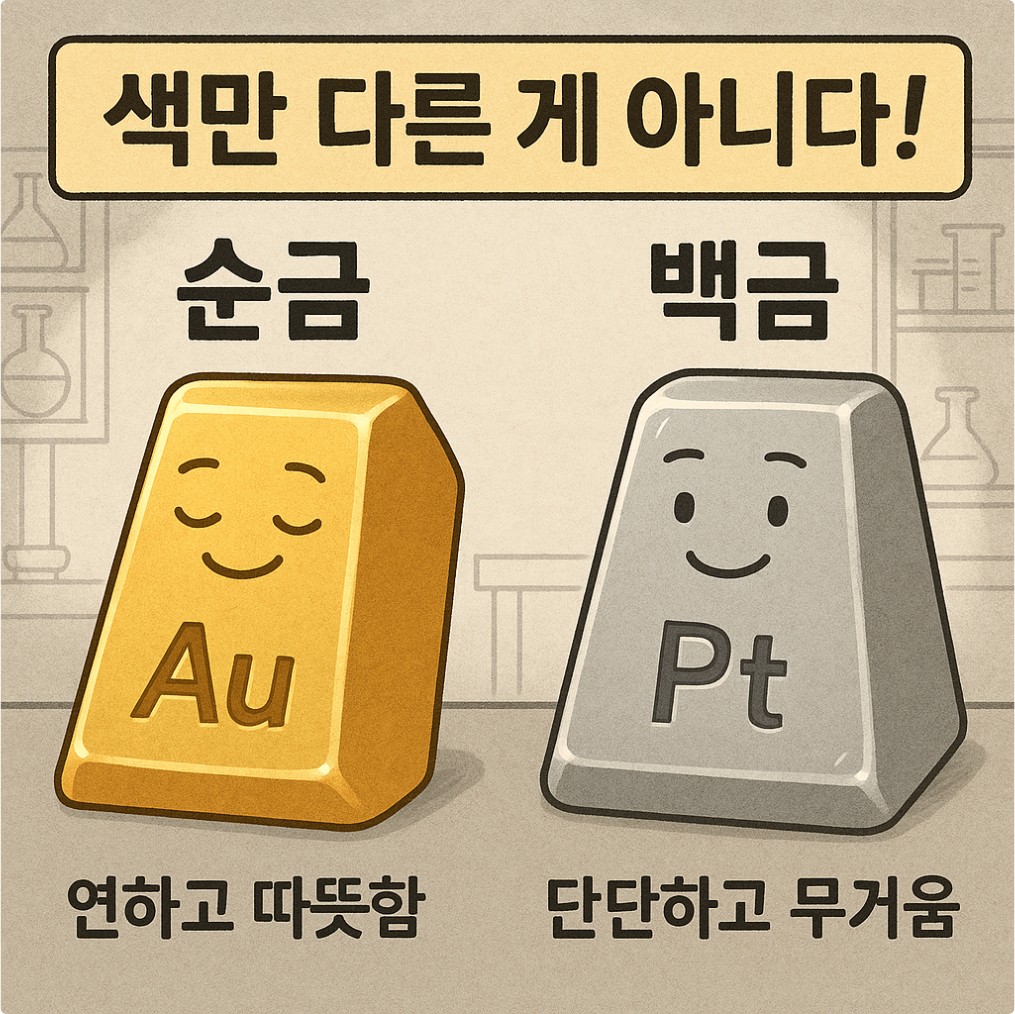
Definitions: What Are They?
Pure Gold (Au)
-
Symbol: Au
-
99.9% gold — known as 24K
-
Soft, yellow, shiny
-
Extremely resistant to corrosion and oxidation
Platinum (Pt)
-
Symbol: Pt
-
Silver-white appearance
-
Harder and denser than gold
-
Higher melting point
-
Resistant even to aqua regia, a powerful acid mix
Beyond Color – The Key Differences
| Property | Pure Gold (Au) | Platinum (Pt) |
|---|---|---|
| Color | Yellow | Silvery-white |
| Hardness | Softer | Harder |
| Weight | Lighter | Heavier (same volume) |
| Reactivity | Very stable | Even more stable |
| Price | Expensive | More costly to process |
| Uses | Jewelry, finance, electronics | Catalysts, dentistry, luxury watches |
Fun Facts
1. Platinum ≠ “White Gold”
White gold is gold alloyed with white metals like nickel or palladium — not actual platinum.
White gold is cheaper, less durable, and often rhodium-plated to look like platinum.
2. Platinum is rarer and harder to work with
It’s denser and tougher, requiring more effort and cost to shape into fine jewelry.
3. Aqua Regia
Gold dissolves in aqua regia, but platinum resists it better, showing its chemical superiority.
Conclusion
Pure gold and platinum may look similar in some settings, but they’re chemically, physically, and economically very different.
Color is just one aspect — their essence is not the same.
Tags
pure gold, platinum, white gold, metal properties, precious metals, element differences, jewelry science