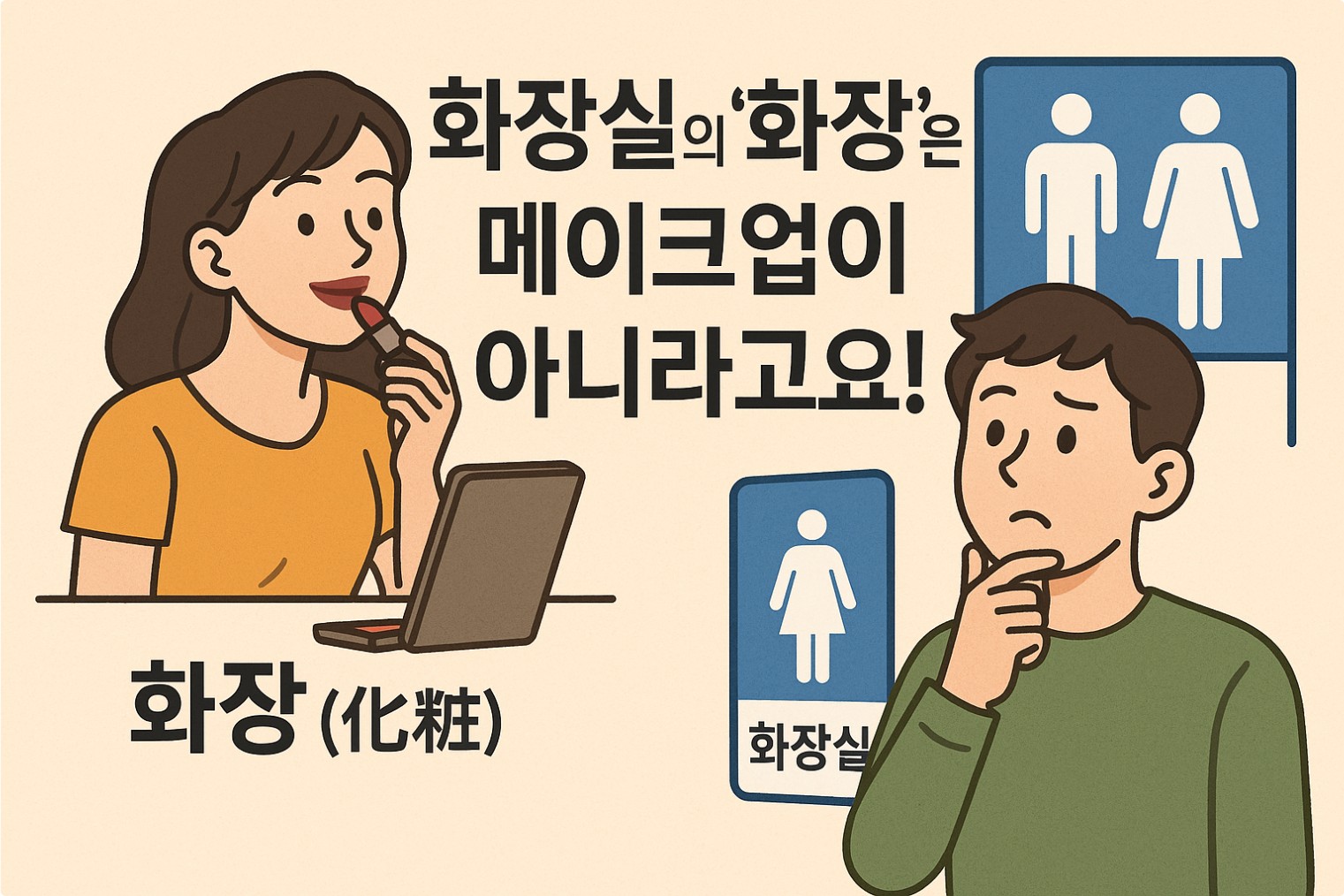
Misconception vs. Reality
Common Misunderstanding
Many think "화장실 (Hwajangsil)" means "makeup room", similar to the English "powder room."
But that’s incorrect — the "hwajang" here doesn’t mean cosmetic makeup (化粧)!
The Real Origin: Not Makeup, But Sanitation
"Hwajang (化)" Means “To Process or Neutralize”
The term originally referred to disposing of waste or cremating bodies — associated with burning, neutralizing, or processing.
So the restroom was a place for sanitary waste management, not beautification.
Evolution of the Term
| Era | Meaning | Notes |
|---|---|---|
| Joseon Dynasty | Waste disposal area | Called "byeonso" or "cheukgan" |
| Modern Japan | 化粧室 (makeup room) used as euphemism | Influenced Korea |
| Today in Korea | Polite term for toilet | Standard public usage |
Fun Facts
1. Japanese Influence
The term “화장실” became popular in Korea through Japan’s use of 化粧室 in public spaces, where it served as a polite euphemism.
2. Different Hanja Characters
-
Makeup: 化粧 (decorate + adorn)
-
Cremation: 火葬 (fire + funeral)
-
Restroom: 化 + manage, more abstractly
➡ "Hwajangsil" isn’t about makeup — it’s about sanitation.
Conclusion
Despite sounding like a “makeup room,” "화장실" actually has roots in waste processing and sanitation.
It’s a term that evolved into a gentle and formal word for what we now call the restroom — a subtle yet clever part of Korean linguistic history.
Tags
toilet, etymology, Korean language, hanja, linguistic misunderstanding, hygiene, euphemism