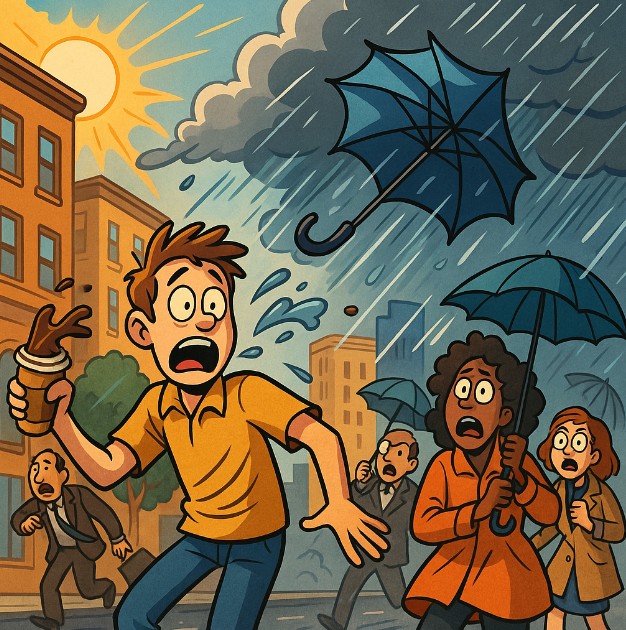
🧾 What Is a “Squall”?
A squall is a sudden, violent gust of wind that often comes with heavy rain, thunder, or even snow.
According to the World Meteorological Organization (WMO):
A squall is defined by a sharp increase in wind speed (over 30 km/h) that lasts at least one minute.
⚠️ Key Points
-
Sudden & dangerous
-
Short duration
-
Often in tropical or coastal regions
-
Can affect aircraft and maritime travel
🌧️ What About a "Shower"?
A shower is a sudden downpour of rain that typically:
-
Lasts a few minutes
-
Is not accompanied by dangerous wind
-
Happens frequently during summer months
✔ Squall vs Shower – Quick Comparison
| Feature | Squall | Shower |
|---|---|---|
| Wind | Strong, gusty | Light or none |
| Duration | Short (few mins) | Very short |
| Danger | High | Low |
| Common in | Tropics | Temperate zones |
🌍 Where Are Squalls Common?
-
Southeast Asia (Indonesia, Philippines)
-
Equatorial regions
-
Near warm oceans or seas
-
Not commonly used in Korean weather forecasts – they just say “shower”
💡 Fun Fact
-
Pilots and ship captains avoid squall zones during navigation.
-
In tropical islands, squalls can turn a calm day into a stormy chaos in seconds.
🧠 Tiny but Useful Tip
If the sky turns black and you feel sudden wind and rain,
→ it might be more than just a shower… you could be in a squall.
📚 Sources
-
WMO Glossary
-
Korea Meteorological Administration
-
NOAA Weather Glossary
Tags:
Korean: 스콜, 소나기, 갑작스런비, 기상현상, 여름날씨, 돌풍
English: squall, rain_shower, sudden_rain, weather_phenomenon, gust, thunderstorm