Origin and Meaning
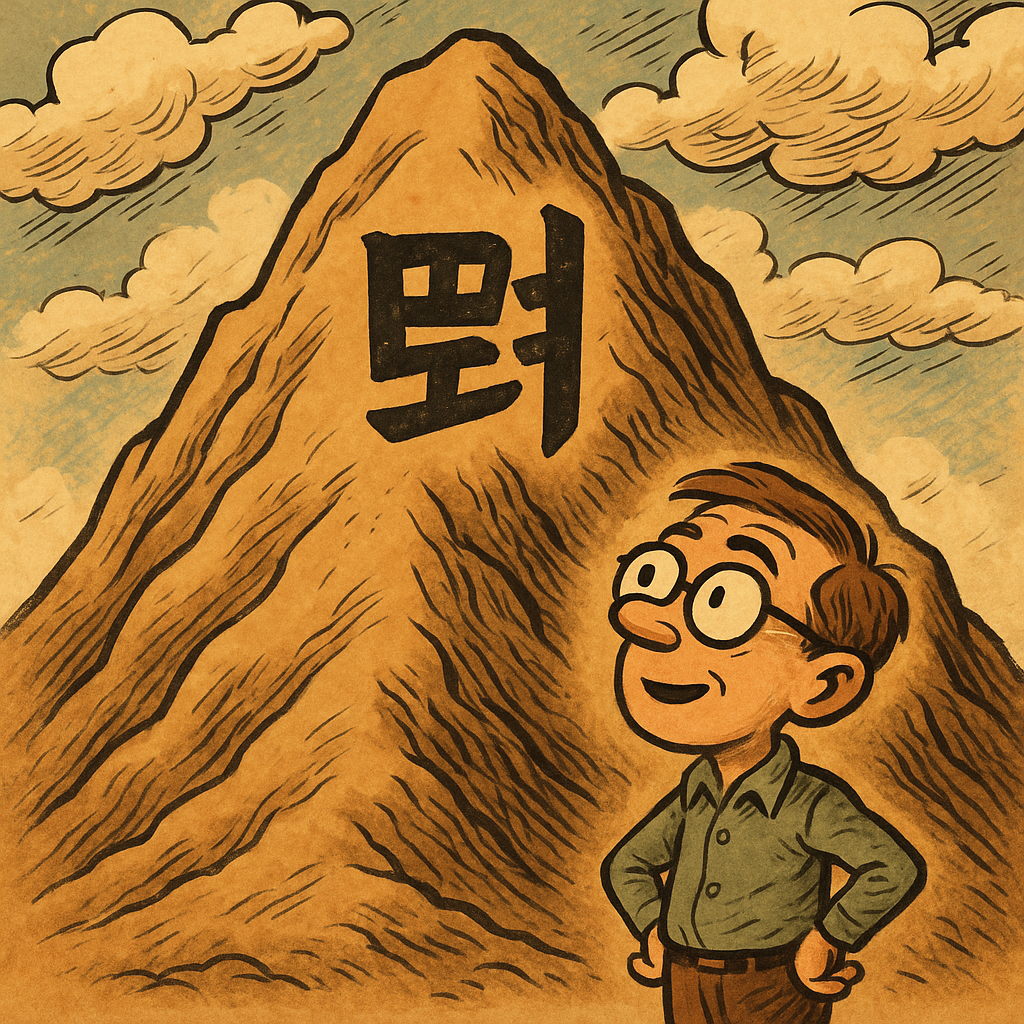
“Taesan may be high, but it's still a mountain under the sky” – What does it mean?
This Korean proverb comes from a sijo (traditional Korean poem) written by Yi Hwang (Toegye), a revered Confucian scholar:
"Even Taesan is just a mountain under the sky.
Climb it again and again, there's no reason you can't reach it.
Yet people just give up and say only the mountain is high."
It teaches a lesson in humility and persistence — nothing is too great if you’re determined.
Why ‘mwe’ instead of ‘san’?
‘Mwe’ is native Korean, ‘San’ is Sino-Korean
-
‘Mwe’ is a native Korean word for mountain, while ‘san’ comes from Chinese characters.
-
Poets and scholars often used mwe to preserve the natural rhythm and emotional resonance of Korean.
Poetic rhythm and feel
-
In sijo, the rhythm matters. “하늘 아래 뫼이로다 (mwe-iroda)” has a softer tone than “san-iroda.”
-
‘Mwe’ adds a warm, grounded tone fitting for philosophical poetry.
😊Fun Facts
-
‘Mwe’ is rarely used in modern Korean but survives in traditional songs, place names, and dialects.
-
North Korea still uses ‘mwe’ more often than South Korea.
-
Poets like Kim Sowol and Baek Seok occasionally revived it in modern literature.
✈️ Similar Sayings in Other Cultures
English – “No mountain is too high if you keep climbing”
-
A common motivational phrase emphasizing persistence over obstacles.
Japanese – 「登ってしまえば、富士も低い」
“Even Mt. Fuji looks small once you've climbed it.”
-
The idea is that challenges seem smaller once you've taken them on.
Sources
-
Yi Hwang (Toegye), Sijo from 『Toegyejip』
-
Standard Korean Dictionary
-
Encyclopedia of Korean Culture
Tags
Korean: 태산이높다하되하늘아래뫼이로다, 뫼, 산, 이황, 시조, 속담, 순우리말, 겸손
English: taesan, mwe, mountainproverb, koreanproverb, humility, persistence, koreanlanguage