🌀 Definition: Different Technologies, Different Goals
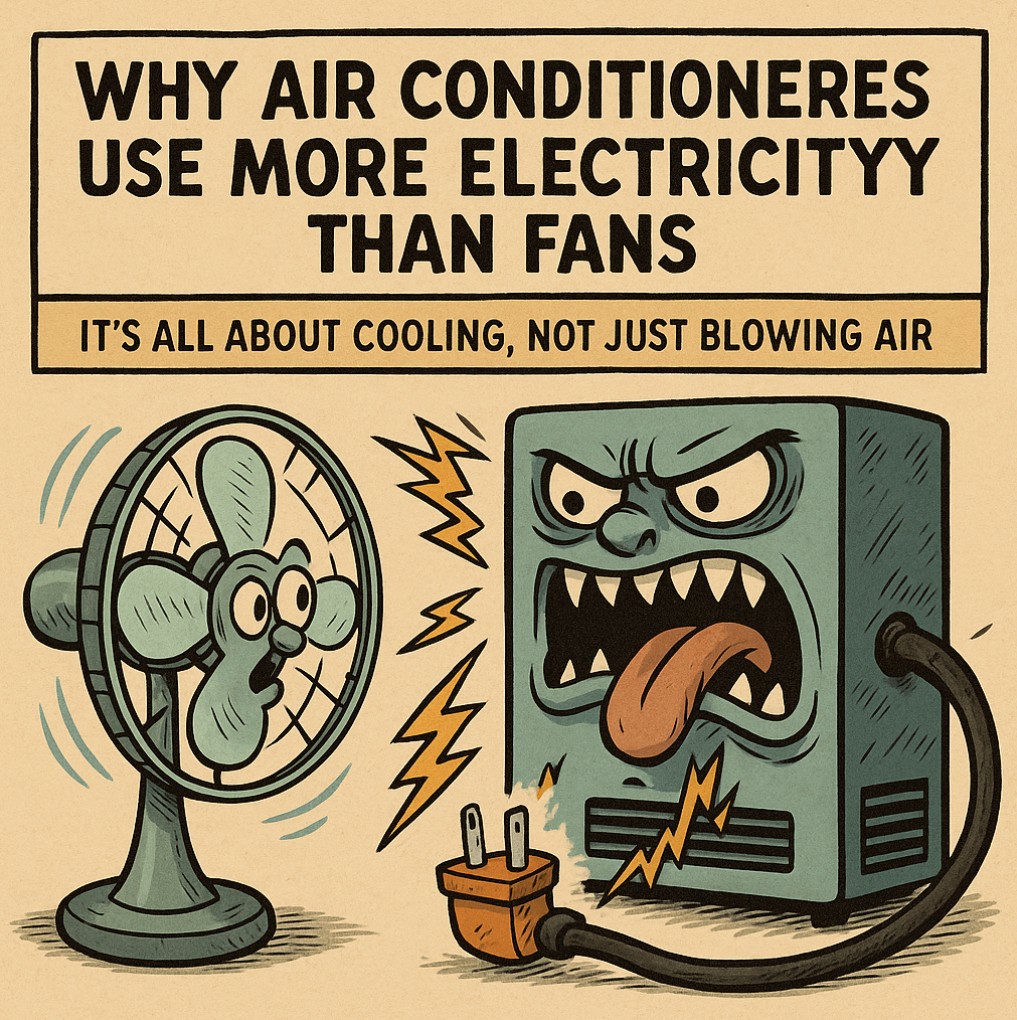
A fan simply circulates air by spinning blades using a small motor.
It doesn’t cool the air but helps evaporate sweat from your skin to make you feel cooler.
An air conditioner, however, uses a refrigeration cycle to remove heat from a room and expel it outdoors.
This involves compressing and expanding refrigerants, which takes significant energy.
🔋 The Main Reason: Thermodynamics in Action
1. Purpose of Power Use
-
Fan: Electricity powers only a small motor. Power consumption: ~30–60W.
-
Air Conditioner: Powers compressors and pumps to move heat. Power consumption: ~800–2000W (home models).
2. Fighting Nature
-
Air conditioners fight the laws of thermodynamics by pumping heat from cooler (indoor) areas to hotter (outdoor) ones.
-
This requires the use of compressors and refrigerants, which consume lots of energy.
🧠 Interesting Facts
-
Fans don’t reduce room temperature and might even raise it slightly due to motor heat.
-
ACs can contribute to urban heat islands by dumping warm air outside.
-
Inverter ACs are smarter and can cut energy usage by up to 40%.
🌍 Global Perspectives
-
Japan: The “Cool Biz” campaign encourages using fans and opening windows instead of ACs during summer.
-
Europe: Passive cooling architecture reduces dependence on air conditioning.
-
USA: AC accounts for about 17% of home electricity bills.
Sources
-
Korea Electric Power Corporation (KEPCO)
-
U.S. Energy Information Administration (EIA)
-
Japan Ministry of Environment