Definition & Principle
What is Sweat?
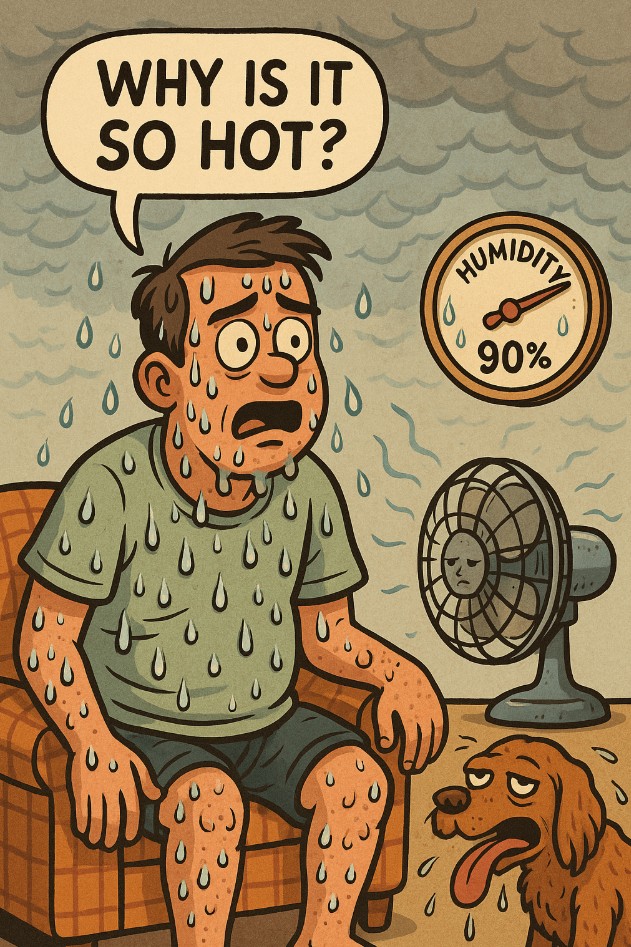
Sweat is how our body cools down.
When our body heats up, we release sweat onto the skin.
As this sweat evaporates, it carries away heat — this is the key cooling mechanism of the human body.
What is Humidity?
Humidity refers to the amount of water vapor in the air.
At 100% relative humidity,
the air is fully saturated with moisture, making it difficult for sweat to evaporate.
Interesting Fact:
"Sweating More" Might Just Be an Illusion
In high humidity, you might not be sweating more,
but the sweat isn't evaporating properly.
So it lingers on your skin, making you feel like you're drenched
— even though the actual sweat output hasn't dramatically increased.
In Contrast: Dry Deserts
In dry desert climates, sweat evaporates so quickly that your skin might feel dry,
even at extreme temperatures.
But you’re still losing water,
which can lead to dehydration without you realizing it.
International Examples
Japan: Sticky During the Rainy Season
During tsuyu (Japan’s rainy season), humidity exceeds 90%. The result?
Sweat can’t evaporate, and people feel hot and sticky even at moderate temperatures.
Southern U.S.: A Humidity Nightmare
Places like Florida or Louisiana often see 70–90% humidity in summer.
Even at 30°C (86°F), it can feel like over 40°C (104°F). Air conditioning is essential.
Conclusion
High humidity doesn’t make you sweat more
— it just prevents your sweat from evaporating, so you feel wetter, stickier, and hotter. It also increases the body’s effort to cool down, making the situation worse.