📜 Meaning and Cultural Context
🧾 "Uri Nara" (우리나라)
-
Literally “our country” in Korean.
-
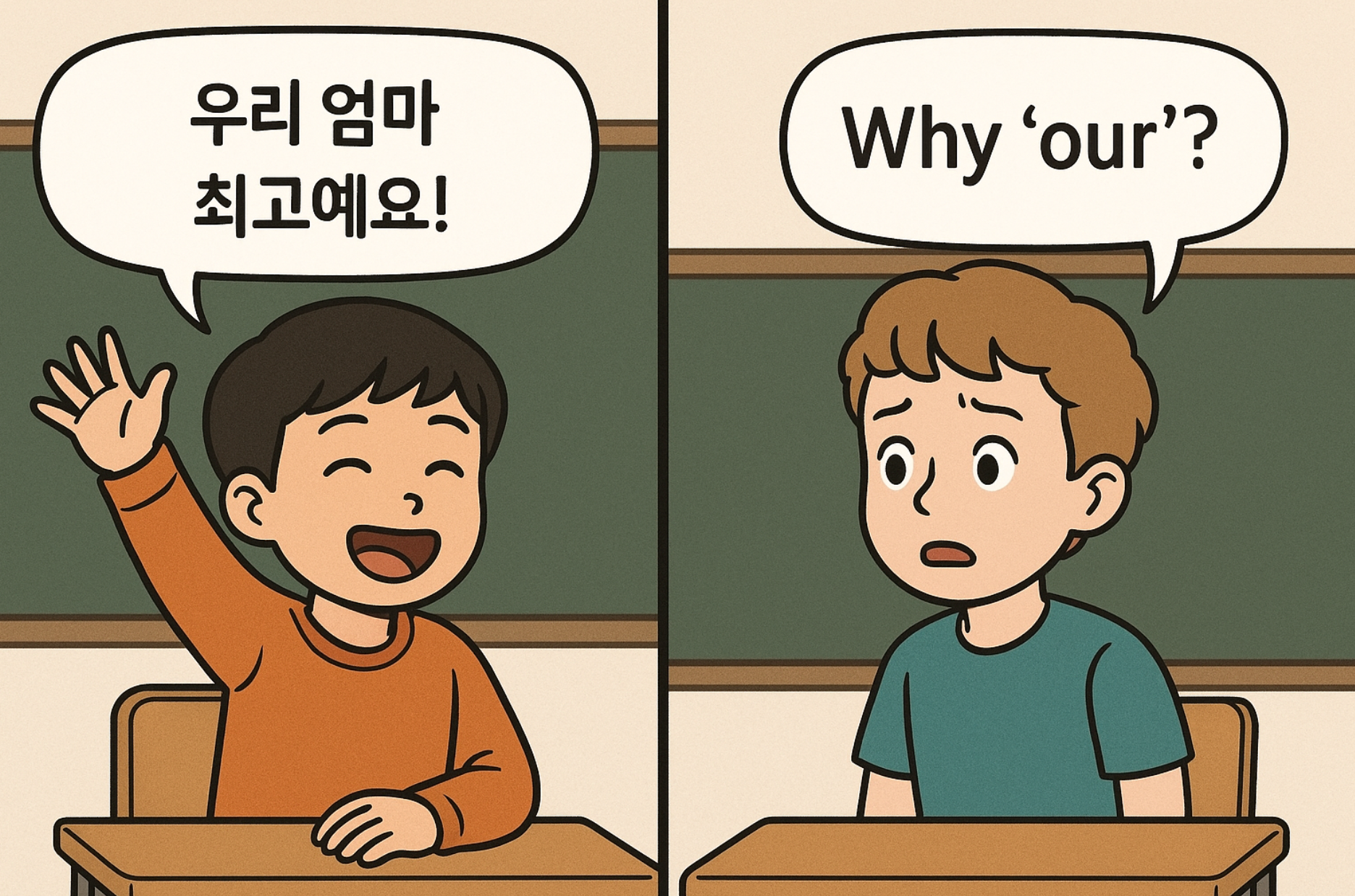
“Uri (우리)” is not just plural “we”, but a way to express belonging and connection.
-
Common in Korean expressions:
-
“Uri eomma” (our mom)
-
“Uri jip” (our house)
-
“Uri hakgyo” (our school)
-
🧾 Why “Jeohee Nara” (저희나라) Feels Awkward
-
"Jeohee (저희)" is a humble form of “we” used to show deference.
-
Using “Jeohee Nara” can imply:
→ “My group's country, not yours” → creates distance.
💬 Examples in Use
| Expression | Natural? | Explanation |
|---|---|---|
| Uri nara team | ✅ Yes | Inclusive, shared identity |
| Jeohee nara president | ❌ Awkward | Excludes listener |
| Uri minjok (our people) | ✅ Natural | Emphasizes collective identity |
| Jeohee minjok | 😬 Strange | Feels like separation |
🧠 Fun Fact
-
There’s no exact equivalent in English for Korean "uri".
-
Phrases like “our husband” in Korean can sound bizarre to non-Koreans.
-
Korean “uri” reflects a deep-rooted cultural norm of group harmony and belonging.
🌏 Compared to Other Languages
-
English uses "my" and "our" based on ownership or perspective:
-
My mom = personal
-
Our mom = shared
-
-
Korean uses “uri” to sound natural and polite, even in private matters.
✅ In Conclusion
✔ “Uri Nara” reflects Korean collective thinking and social closeness.
✔ “Jeohee Nara” sounds distant or exclusive and is rarely used.
Language reveals culture — and in Korea,
it shows how being part of a group is part of who you are.